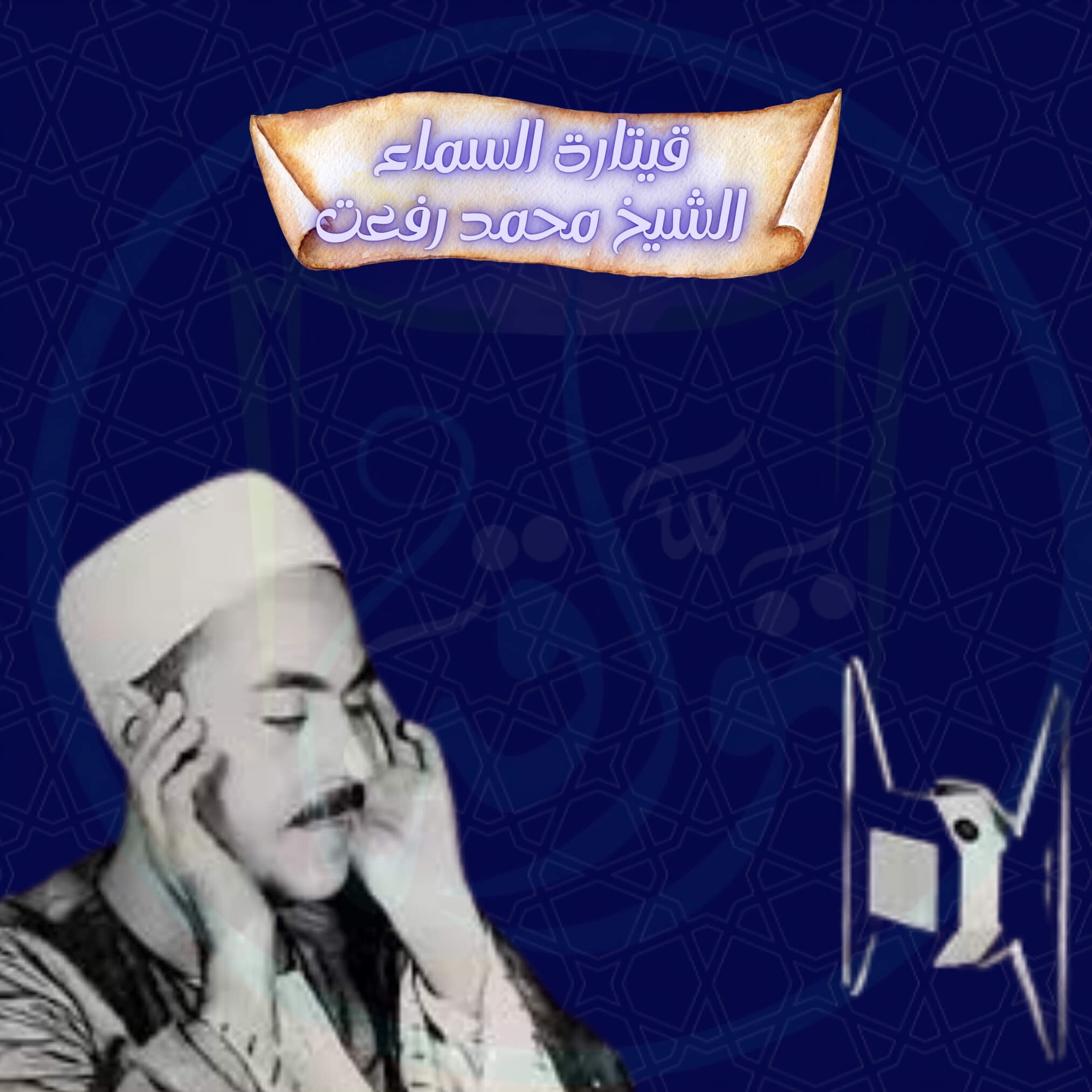
Sheikh Mohamed Refaat
sheikh Saad Nasser
The Melodious Nightingale of the Heavens: Sheikh Muhammad Rifat – A Pioneer of Quranic Recitation
Where and When Was Sheikh Muhammad Rifat Born?
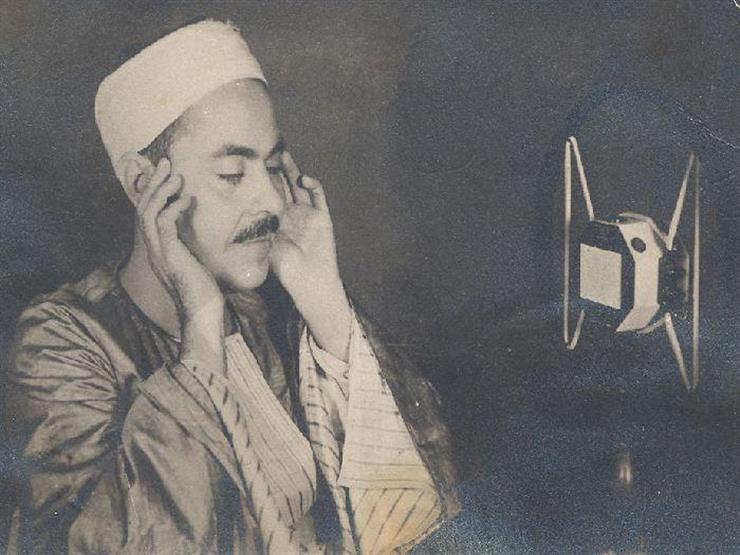
Sheikh Muhammad Rifat was born on Monday, May 9, 1882 CE, in Darb Al-Aghawat in the Al-Magharbeleen district of Cairo. Tragically, he lost his sight at a young age, around two years old. He is an Egyptian Quran reciter (Qari) and is considered one of the most prominent figures in this field. His admirers affectionately call him "The Lute of the Sky" (Qitharat Al-Samaa).
The Inauguration of Egyptian Radio
The Egyptian Radio was inaugurated with his voice in 1934 CE. His full name is Sheikh Muhammad Rifat ibn Mahmoud Rifat ibn Muhammad Rifat (his name, his father's, and his grandfather's names are all compound names).
When Did Sheikh Muhammad Rifat Start Memorizing the Quran?
He began memorizing the Holy Quran at the age of five when his father enrolled him in the Kuttāb (school) of Bishtak, which was attached to the Fadil Pasha Mosque in Darb Al-Jamamiz, Sayyida Zeinab district. His first teacher was Sheikh Muhammad Hamida. He completed the memorization of the Holy Quran and a collection of the Prophetic Hadiths. After six years, his teacher sensed his uniqueness and began nominating him to lead recitations during evening gatherings in nearby areas. He studied the science of Quranic Readings (Qira'at) and Tajweed for two years under Sheikh Abdul Fattah Al-Huneidi, who had the highest sanad (chain of narration) of his time, and obtained his certification (ijazah).
His father, Mahmoud Rifat, who worked as an inspector in the Gamaliya police station, passed away when Muhammad was only nine. The orphaned child suddenly found himself responsible for his family, which consisted of his mother, his aunt, his sister, and his brother "Muharram," becoming their sole provider after the initial intention was to enroll him at Al-Azhar University. At the age of fourteen, he began leading evening recitations of the Holy Quran in Cairo, and later he was invited to recite in the provinces.
Sheikh Muhammad Rifat's Marriage and Family
He married Hajjah Zeinab from the village of Al-Faraouniya in Menoufia. They had four children: the eldest, Muhammad, born in 1909 CE, accompanied his father and served as his secretary and business manager; then Ahmad, born in 1911 CE, who followed his father's path, memorized the Quran, studied the Qira'at, and obtained his ijazah in them; then his daughter Bahiyya, born in 1914 CE, who married Abdo Farraj; and the youngest, Hussein, born in 1920 CE, who used to read books to his father. They have all passed away.
Sheikh Muhammad Rifat's Career
He was appointed as the reciter (Qari al-Sura) at the Fadil Pasha Mosque in the Sayyida Zeinab district in 1918 CE at the age of fifteen. He gained great fame and public affection. Prominent figures like Al-Nahhas Pasha and King Farouk were keen to listen to him. He continued to recite in the mosque until his retirement, out of loyalty to the mosque that witnessed his birth into the world of recitation from an early age.
He inaugurated the broadcast of Egyptian Radio in 1934 CE after consulting Sheikh Al-Azhar Muhammad Al-Ahmadi Al-Zawahiri on the permissibility of broadcasting the Holy Quran. The Sheikh ruled that it was permissible, so Rifat inaugurated it with a verse from the beginning of Surah Al-Fath:
| Arabic Text | English Translation (Based on Official Sources) |
|---|---|
| إِنَّا فَتَحْنَا لَكَ فَتْحًا مُّبِينًا | "Indeed, We have granted you, [O Muhammad], a manifest victory." (Al-Fath 48:1) |
When the BBC Arabic Service heard his voice, they requested him to record the Quran. He initially refused, believing it was prohibited (haram) as they were non-Muslims. He then consulted Imam Al-Maraghi, who explained the matter and informed him that it was permissible, so he recorded Surah Maryam for them.
Characteristics of His Recitation and the Beauty of His Voice
Sheikh Muhammad Rifat possessed a beautiful voice with a unique and non-repeating timbre, and a distinctive style of Quranic recitation. He recited the Quran with contemplation and reverence (Khushu') that made the listener live the meanings and scenes of the Holy Quran with all their senses, not just their ears. He effectively conveyed the message of the Quran and impacted his listeners.
He would begin with seeking refuge with Allah from the accursed Shaytaan (A'udhu Billahi minash Shaytanir Rajeem) and the Basmala (Bismillahir Rahmanir Raheem), reciting calmly and precisely. After that, his voice would often ascend, starting low and then rising to become "high" but measured—touching and captivating the heart, narrating the verses with fluency, meticulous care, and deep consciousness of the verses of the Wise Reminder.
He placed great importance on the articulation points of the letters (Makharij Al-Huruf), giving every letter its due not just to avoid altering the meaning, but to ensure the true meaning reached people's hearts. His voice was truly beautiful, deep, and resonant. He transitioned between different recitations with remarkable skill and mastery, without artifice. Sheikh Muhammad Rifat possessed enormous vocal capabilities, allowing him to transition very smoothly between the Maqamat (melodic modes) during his recitation. Not only that, but he had the ability to transmit feelings to the listeners, knowing when to make them weep and when to gladden them through the verses of encouragement and deterrence in the Book of Allah, the Mighty and Sublime. He was blessed with a melodious pipe, like the pipes of David. Setting aside the aesthetic qualities of his voice, its power was such that he could reach over 3,000 people in open spaces.
He was dedicated to preserving his voice, avoiding colds, not smoking, and skipping dinner.
Reciters Influenced by Sheikh Muhammad Rifat
Sheikh Abu Al-Ainain Shu'aisha' is considered one of the reciters most influenced by Sheikh Muhammad Rifat's recitation and voice, being so similar to him that Egyptian Radio used him to compensate for gaps in Sheikh Rifat's private recordings.
Sheikh Muhammad Rashad Al-Sharif, the reciter of Al-Aqsa Mosque, was also influenced by Sheikh Muhammad Rifat's recitation. In 1943, after listening to Muhammad Rashad Al-Sharif, Sheikh Muhammad Rifat said: "I am listening to Muhammad Rifat from Palestine," and sent him a letter in 1944 considering him the "Second Muhammad Rifat."
How Did Sheikh Muhammad Rifat's Recitations Spread Globally?
Most of Sheikh Muhammad Rifat's recitations were held at the Fadil Pasha Mosque in Cairo, where people, including King Farouk, would flock to listen. The Egyptian Radio would broadcast his performances from there. In the summer, he would recite the Quran at the Abu Al-Abbas Al-Mursi Mosque in Alexandria.
In addition to his live on-air recitations from the Egyptian Radio House, which contracted with him from its opening—especially during Ramadan, when he would recite two live recitations daily except Sundays. The first recitation was from 9:00 PM to 9:45 PM, and the second from 10:30 PM to 11:15 PM.
Almost all of his recordings are thanks to one of his biggest admirers, Zakaria Pasha Mahran, one of the notables of Al-Qusiya district in Assiut and a member of the Egyptian Senate. He is credited with preserving the legacy of Sheikh Rifat that we hear today. He loved Sheikh Rifat without ever meeting him and was keen to record his performances broadcast live by Egyptian Radio. For this purpose, he bought two gramophone devices from Germany.
When he learned of Sheikh Rifat's illness, he rushed to the radio carrying one of these records and asked the radio officials to grant Sheikh Rifat a lifetime pension. The radio indeed allocated 10 Egyptian pounds as a monthly pension for Sheikh Rifat, but the Sheikh passed away before receiving it. Zakaria Pasha's family donated the records for publication. Sheikh Muhammad Rifat's heirs acquired them after Zakaria Pasha Mahran's death from his wife, "Zeinab Hanem Mubarak." Were it not for these recordings, his legacy would have been lost, save for three recordings kept by the radio. These records not only had an impact on the Sheikh's life but also on his admirer, Zakaria Pasha, who recorded them without ever knowing or seeing Rifat. Zakaria Pasha's wife stated: "Despite my husband Zakaria Pasha Mahran's activities in economy, law, politics, and authorship, his name is only mentioned in conjunction with his having recorded a collection of Sheikh Muhammad Rifat's recitations."
Mrs. Hana Hussein Muhammad Rifat, the Sheikh's granddaughter, explained that the Sheikh's children spent their lives restoring and treating these records, and that her father donated 30 hours of Sheikh Rifat's voice to the radio free of charge, which is all the legacy we hear today. She stressed that the grandchildren are continuing the journey, trying to save another 30 hours of Sheikh Rifat's voice that has not yet seen the light and reached his admirers' ears, stating: "We transferred all the records to a hard disk and worked in several studios to repair and purify them, but with our limited capabilities. We need high-tech studios and resources beyond our capacity, which is why we stopped."
Sheikh Muhammad Rifat's Tenderness, Mercy, and Personal Character
It is recounted that the Sheikh was merciful, tender, with deep feelings, and compassionate towards the poor and needy. He was even concerned about his horse every day and gave instructions for its feeding. It is narrated that he visited a friend shortly before his death, and his friend asked him: "Who will look after my daughter after I die?" The Sheikh was deeply moved by this. The next day, while the Sheikh was reciting the Quran from Surah Ad-Duha and reached the verse where Allah says:
فَأَمَّا الْيَتِيمَ فَلَا تَقْهَرْ
"So as for the orphan, do not oppress [him]." (Ad-Duha 93:9)
He remembered the girl and burst into tears with heat. He then allocated an amount of money for the girl until she got married.
He was an ascetic, Sufi-inclined, following the Naqshbandi path, and preferred the company of poor, simple people over mixing with the wealthy. He once led a ceremony for his poor neighbor, preferring it over attending the annual commemoration of the death of King Fuad, King Farouk's father.
He was a man who wept easily, with his tears wetting his cheeks during his recitation. He even collapsed once while leading prayers, reciting a verse that described a scene of the torment of the Hereafter. He was a devout man (Rabbani) who would retreat into solitude to commune with and supplicate to Allah.
What Was Sheikh Muhammad Rifat's Illness and When Did He Pass Away?
In 1943 CE, Sheikh Muhammad Rifat's larynx was struck by an attack of hiccup (Zaghata or Fuwaq) that interrupted his recitation, forcing him to stop reading. This hiccup was caused by a tumor in his larynx, believed to be laryngeal cancer. He spent all he owned on treatment until he became poor, but he never asked anyone for help. He even refused to accept the amount collected in a subscription (around fifty thousand Egyptian pounds) for his treatment, even though he could not afford the costs. His famous reply was: "The reciter of the Quran shall not be disgraced (or humiliated)."
The Sheikh passed away on May 9, 1950 CE. His dream was to be buried near the Sayyida Nafisa Mosque. He was subsequently granted a plot of land near the mosque, and he built his tomb there. It was his custom to go there every Monday to recite what was easy for him from the Verses of the Wise Reminder.
They Said About Sheikh Muhammad Rifat
Sheikh Abu Al-Ainain Shu'aisha' described him as the Crying Voice: "He used to recite the Quran while weeping, with tears on his cheeks."
When Sheikh Muhammad Metwally Al-Shaarawi was asked about Sheikh Muhammad Rifat, he said: "If we want precision in recitation (Ahkam Al-Tilawah), then Al-Husary; if we want sweetness of voice, then Abdul Basit Abdul Samad; if we want long breath with mellowness, then Mustafa Ismail; and if we want all of these together, it is Muhammad Rifat."
About Sheikh Muhammad Rifat's voice, Sheikh Muhammad Al-Saifi said: "Rifat was not like the rest of the voices that are subject to human judgment... He was a gift from the heavens."
The writer Muhammad Al-Sayyid Al-Muwailihi said about him in Al-Risala magazine: "The master of reciters of this era, a musician by instinct and nature. He offers our souls the loftiest, most sacred, and most radiant types of music. He captivates and enchants us with his voice alone, without needing an orchestra."
Anis Mansour says: "The late Sheikh Rifat remains the most beautiful and most wonderful voice, and the secret of the beauty and majesty of Sheikh Rifat's voice is that it is unique in its essence, and that this voice is capable of raising you to the level of the verses and their meanings. Furthermore, it is unlike any other voice."
The musician Muhammad Abdul Wahab described Sheikh Muhammad Rifat's voice as angelic, coming from the heavens for the first time.
When the writer Mahmoud Al-Saadany was asked about the secret of Sheikh Muhammad Rifat's uniqueness, he said: "He was full of belief and faith in what he was reciting."
Ali Khalil, the 'Sheikh of the Broadcasters,' said about him: "He was a man of tranquil soul; sitting with him, you would feel that the man was enjoying his life as if he were in the Garden of Eternity. He was an angelic entity; you could see purity, serenity, tranquility, and sincere faith in the Creator on his face, as if he was not of the people of the earth."
The former Sheikh of Al-Azhar, Mustafa Al-Maraghi, said: "He is a gift from destiny when it is lenient and generous, indeed, a tribute from it to humanity."
The broadcaster Muhammad Fathy, nicknamed the 'Nightingale of the Radio,' said: "Listen to Sheikh Muhammad Rifat as he recites Surah Yusuf, because the art of recitation has reached its peak, indeed its highest point of authenticity and precision, especially from Sheikh Muhammad Rifat. Artistic ecstasy reaches its climax as you soar with the reciter into the highest heavens with the events of the Divine narrative... How marvelous he is as he depicts the human being under the pressure of the overwhelming instinct that almost sweeps away even the Prophet (Yusuf):
وَلَقَدْ هَمَّتْ بِهِ وَهَمَّ بِهَا
"And she certainly desired him, and he would have desired her." (Yusuf 12:24, part of the verse)
"Then listen to him as he recites, on the tongue of the wife of Al-Aziz (Zulaykha), هَيت لك (Haita laka - Come to me) once with a Fatha (A sound) on the Haa' and هِيت لك (Heeta laka - Come to me) with a Kasra (E sound) on the Haa' the second time, a sublime performance that elevates man above himself."
Sheikh Ahmed Al-Sharbassi said: "Sheikh Muhammad Rifat gives us meanings that were hidden from us."
Musicologists stated: "Sheikh Muhammad Rifat's voice combined all the characteristics of the Arab larynx, including the creative melodies and vocal cords."
Egyptian Radio mourned him upon his death to listeners by saying: "O Muslims, today we have lost a banner of the banners of Islam."
The Syrian Radio's eulogy came through the Mufti, who said: "The reciter who dedicated his voice to Islam has died."
May Allah have mercy on Sheikh Muhammad Rifat and grant him the Highest Paradise.
The article was compiled and prepared by Sheikh Saad Abdul Samad Nasser.
منصة تواقة
مقال رائع رحم الله الشيخ الجليل محمد رفعت وجزاك الله خيرا شيخ سعد ناصر على هذا المقال الرائع