9 months ago

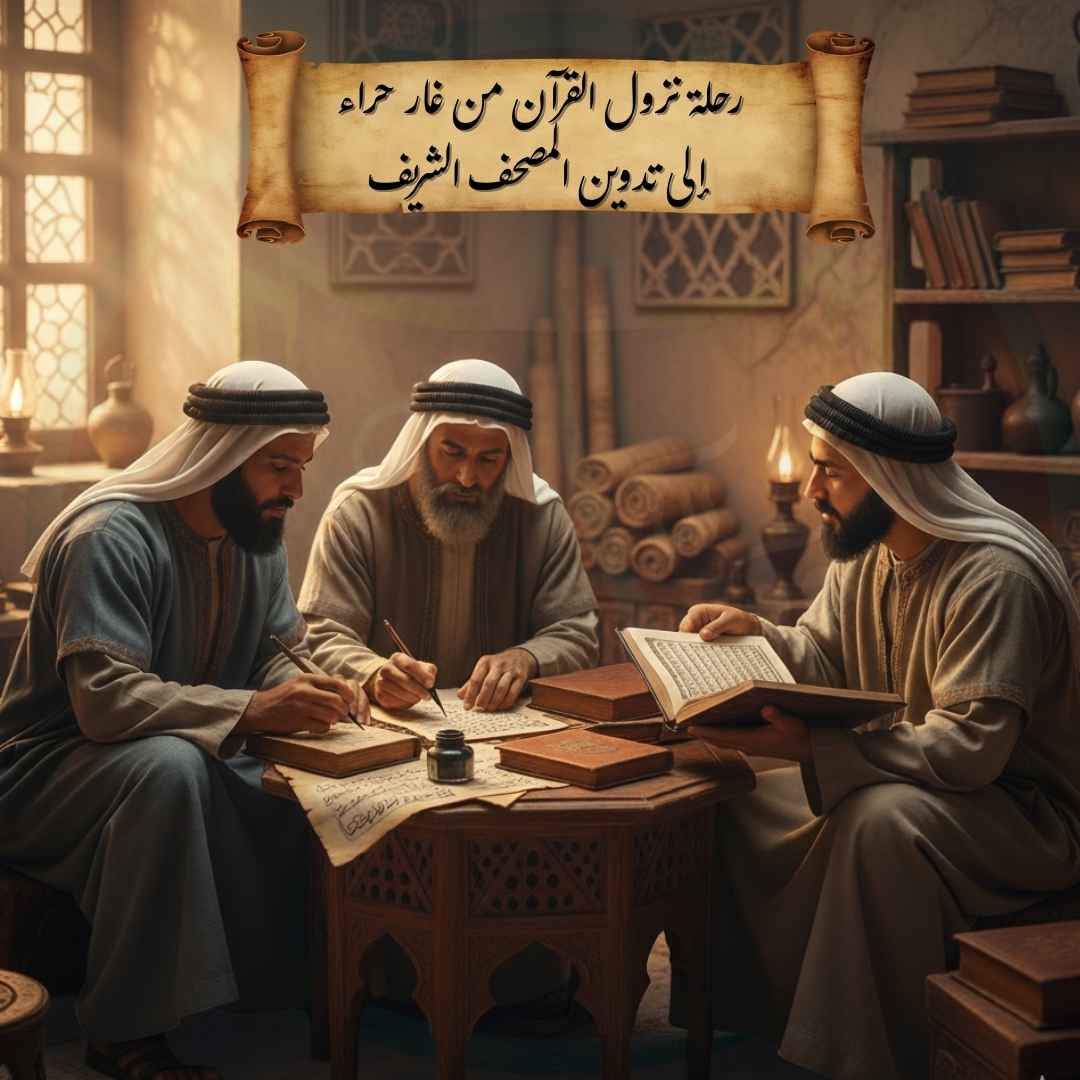
In the Name of Allah, the Most Gracious, the Most Merciful. May peace and blessings be upon the Master of Prophets and Messengers, our Prophet Muhammad, and upon his family and all his companions.
O lovers of truth, those thirsting for the pure water of Revelation, and those embarking on the noble journey of knowledge!
Our journey today is not merely a historical overview; it is a faith-driven contemplation of the greatest event humanity has ever known: The Revelation of the Holy Qur'an. This Book, which is the firm rope of Allah and His clear light, was not revealed in vain. Instead, it was revealed with a precise divine methodology, beginning at a pivotal moment that changed the face of history.
Understanding how the Qur’an’s revelation began serves as a fundamental entry point for everyone who seeks to teach the Qur’an and memorize it with perfection. It solidifies belief in the truth and greatness of this message. In this comprehensive article, we will delve into the blessed journey of the revelation, starting from the very first moment in the Cave of Hira (Ghar Hira), passing through the stages of gradual revelation over twenty-three years, and concluding with the stage of codification of the Mus'haf, which safeguarded the text from loss.
Station One: The Precursors and the Beginning of Revelation in the Cave of Hira
Before the revelation began, the Prophet Muhammad (peace and blessings be upon him) went through a stage of "precursors" that prepared his heart to receive the great message. The Prophet used to incline towards seclusion and contemplation, away from the hustle of the pre-Islamic era (Jahiliyyah), choosing the Cave of Hira in the Mountain of Light to worship for many nights.
The Preparation (The True Vision)
The books of Sunnah and Prophetic Biography indicate that the first signs of prophethood were true visions (dreams). Narrated by 'Aisha, the Mother of the Believers (may Allah be pleased with her), she said:
«أَوَّلُ مَا بُدِئَ بِهِ رَسُولُ اللَّهِ صَلَّى اللَّهُ عَلَيْهِ وَسَلَّمَ مِنَ الْوَحْيِ الرُّؤْيَا الصَّادِقَةُ فِي النَّوْمِ، فَكَانَ لَا يَرَى رُؤْيَا إِلَّا جَاءَتْ مِثْلَ فَلَقِ الصُّبْحِ» [صحيح البخاري ومسلم]
“The commencement of the Divine Inspiration to the Messenger of Allah (peace and blessings be upon him) was in the form of true dreams. He never saw a dream but it came true like daylight.” [Sahih Al-Bukhari and Muslim]
These visions served as a spiritual and intellectual training for the Prophet to receive the unseen, until he became accustomed to it and his soul was purified to bear the weight of the Message.
The Pivotal Moment: The Descent of “Iqra (Read)”
In Ramadan of 610 CE, during his customary seclusion in the Cave of Hira, the definitive moment that shook existence arrived. Gabriel (Jibrīl) (peace be upon him) descended, carrying the first verses of the Holy Qur'an. 'Aisha, the Mother of the Believers, narrated the details of this momentous start:
«فَجَاءَهُ الْمَلَكُ فِيهِ فَقَالَ: اقْرَأْ. قَالَ: مَا أَنَا بِقَارِئٍ. قَالَ: فَأَخَذَنِي فَغَطَّنِي حَتَّى بَلَغَ مِنِّي الْجَهْدَ، ثُمَّ أَرْسَلَنِي فَقَالَ: اقْرَأْ. فَقُلْتُ: مَا أَنَا بِقَارِئٍ. فَأَخَذَنِي فَغَطَّنِي الثَّانِيَةَ حَتَّى بَلَغَ مِنِّي الْجَهْدَ، ثُمَّ أَرْسَلَنِي فَقَالَ: اقْرَأْ. فَقُلْتُ: مَا أَنَا بِقَارِئٍ. فَأَخَذَنِي فَغَطَّنِي الثَّالِثَةَ ثُمَّ أَرْسَلَنِي فَقَالَ: (اقْرَأْ بِاسْمِ رَبِّكَ الَّذِي خَلَقَ * خَلَقَ الْإِنْسَانَ مِنْ عَلَقٍ * اقْرَأْ وَرَبُّكَ الْأَكْرَمُ * الَّذِي عَلَّمَ بِالْقَلَمِ * عَلَّمَ الْإِنْسَانَ مَا لَمْ يَعْلَمْ)» [صحيح البخاري]
“The angel came to him and said, ‘Read!’ He said, ‘I cannot read.’ He held me and pressed me so hard that I was utterly exhausted, then he released me and said, ‘Read!’ I said, ‘I cannot read.’ He held me again and pressed me so hard that I was utterly exhausted, then he released me and said, ‘Read!’ I said, ‘I cannot read.’ He held me a third time and pressed me so hard that I was utterly exhausted, then he released me and said: {Read! In the Name of your Lord Who created, created man from a clinging substance. Read! And your Lord is the Most Generous, Who taught by the pen, taught man that which he knew not.}” [Sahih Al-Bukhari]
These five verses from Sūrat al-ʿAlaq (The Clinging Substance) were the first to be revealed from the Qur'an absolutely. They carry the essence of the message: Knowledge, Reading, and Learning by the Pen, linking the divine message with civilization and science, and affirming the great importance of reading and knowledge as a tool for understanding.
Station Two: The Gradual Revelation Journey (23 Years)
The Qur'an was not revealed all at once; rather, it was revealed piecemeal over twenty-three years, known as the gradual revelation (Tanjīm). This gradual nature carried immense and profound wisdom related to legislation and the solidification of faith.
The Wisdom Behind the Gradual Revelation
Allah Almighty mentioned the wisdom behind this gradual revelation in response to the objections of the polytheists, saying:
وَقَالَ الَّذِينَ كَفَرُوا لَوْلَا نُزِّلَ عَلَيْهِ الْقُرْآنُ جُمْلَةً وَاحِدَةً كَذَلِكَ لِنُثَبِّتَ بِهِ فُؤَادَكَ وَرَتَّلْنَاهُ تَرْتِيلًا [سورة الفرقان: الآية 32]
"And those who disbelieve say, 'Why was the Qur’an not sent down to him all at once?' Thus (it was revealed) that We might strengthen your heart thereby. And We have recited it in a progressive recitation." [Sūrat al-Furqān: Verse 32]
The most important wisdoms behind the gradual revelation:
Strengthening the Prophet's Heart: The revelation would descend during the most difficult circumstances, serving as divine support to solidify his heart upon the truth.
Gradual Legislation: Had the entire legislation been revealed at once, it would have been difficult for the people. Instead, it was revealed progressively according to events and incidents (Causes of Revelation - Asbāb an-Nuzūl), making it easier for the community to accept and act upon.
Facilitating Memorization and Comprehension: The revelation of short verses or groups of verses made it easy for the Companions to memorize the Holy Qur'an and contemplate its meanings, especially in a society where illiteracy was widespread. This is the very methodology followed in modern Qur'an memorization programs; division into parts for ease of perfection.
The Three Stages of Revelation
In Qur'anic Sciences, scholars differentiate between three stages of the Qur'an's revelation:
The First Revelation (Total Descent): To the Preserved Tablet (al-Lawḥ al-Maḥfūẓ), where Allah says:
بَلْ هُوَ قُرْآنٌ مَّجِيدٌ * فِي لَوْحٍ مَّحْفُوظٍ [سورة البروج: الآيتان 21-22]
{Nay, but it is a Glorious Qur’ān, (inscribed) on a Preserved Tablet.} [Sūrat al-Burūj: Verses 21-22]
The Second Revelation (Wholesale Descent): From the Preserved Tablet to the House of Might (Bayt al-'Izzah) in the lowest heaven. Allah says about this:
شَهْرُ رَمَضَانَ الَّذِي أُنزِلَ فِيهِ الْقُرْآنُ هُدًى لِّلنَّاسِ وَبَيِّنَاتٍ مِّنَ الْهُدَى وَالْفُرْقَانِ [سورة البقرة: الآية 185]
{The month of Ramaḍān in which the Qur’ān was sent down as a guidance for mankind, and clear proofs of the guidance and the Criterion (between right and wrong).} [Sūrat al-Baqarah: Verse 185] This explains the secret connection between the blessed month of Ramadan and the revelation of the Qur'an.
The Third Revelation (Detailed Descent): From the House of Might to the heart of the Prophet (peace and blessings be upon him) via Gabriel, over the course of 23 years.
Station Three: Preservation and Reception (The Stage of the Chest and Oral Transmission)
Before Muslims widely adopted writing and codification, the primary stage for preserving the Qur'an was memorization in the chests and oral transmission (Mushāfahah). This is the secret that guaranteed the integrity of the Qur'anic text.
Reliance on Chest Memorization and Tajwīd
The early Muslims relied on:
The Chest: The Companions competed in memorization, and the Prophet (peace and blessings be upon him) encouraged them to do so.
Oral Transmission: The Prophet (peace and blessings be upon him) would recite to Gabriel, then to the Companions, and they would recite back to him. This oral transmission preserved Tajwīd (recitation rules) and the Qirā'āt (readings) from distortion. The letter is taken from the mouth of the teacher through reception and hearing, which explains the essential role of the instructor in Qur'an teaching, including remote Qur'an teaching.
Scribes of the Revelation (Kuttāb al-Wahy): The Prophet (peace and blessings be upon him) appointed specialized Companions to write down what was revealed on parchments, flat stones, and shoulder blades (the available tools at the time). They placed each verse in its exact location by direct prophetic command, not by personal interpretation.
The Role of the Arabic Language and Eloquence
In this stage, the Arabic language played the role of the Qur'an's vessel. The Qur'an was revealed in the most eloquent and clearest of languages, posing a challenge to the Arab rhetoricians, as Allah Almighty said:
قُل لَّئِنِ اجْتَمَعَتِ الْإِنسُ وَالْجِنُّ عَلَىٰ أَن يَأْتُوا بِمِثْلِ هَٰذَا الْقُرْآنِ لَا يَأْتُونَ بِمِثْلِهِ وَلَوْ كَانَ بَعْضُهُمْ لِبَعْضٍ ظَهِيرًا [سورة الإسراء: الآية 88]
"Say: 'If mankind and jinn were to gather together to produce the like of this Qur’ān, they would never be able to produce the like thereof, even if they backed up each other with help and support.'" [Sūrat al-Isrā: Verse 88]
The study of Qur'anic Language and Rhetoric is an integral part of Qur'anic Sciences and is of immense importance, especially in our current era for teaching the Arabic language to non-native speakers, as the Qur'an represents the pinnacle of eloquence and clear expression.
Station Four: The Codification of the Mus'haf (The First and Second Compilations)
After the death of the Prophet (peace and blessings be upon him), the need arose to codify the Qur'an into a single compiled Mus'haf, due to the subsequent events.
The Compilation During the Reign of Abu Bakr As-Siddiq (May Allah be pleased with him)
The first stage of Qur'an compilation occurred after the Battle of Yamāmah, where a large number of the memorizers of the Qur'an (Qurrā') were martyred. 'Umar ibn al-Khaṭṭāb (may Allah be pleased with him) realized the seriousness of the matter and advised the Caliph Abu Bakr As-Siddiq (may Allah be pleased with him) to compile the Qur'an.
Reason: Fear of the loss of what was held in the chests of men.
Responsibility: Zayd ibn Thābit al-Anṣārī (may Allah be pleased with him) was assigned the task, as he was one of the Scribes of the Revelation and combined both memorization and writing.
Methodology: Zayd would only accept a verse if it was already written down, memorized in the chests, and witnessed by two people.
This compilation resulted in the Qur'anic text on scrolls, with verses ordered but not the sūrahs, and it remained with Abu Bakr, then with 'Umar, and then with Ḥafṣah bint 'Umar (Mother of the Believers).
The Compilation During the Reign of Uthman ibn Affan (May Allah be pleased with him) (The Imām Mus'haf)
During the reign of Uthman (may Allah be pleased with him), the Islamic state expanded, Muslims mixed with non-Arabs, and differences in the modes of recitation appeared among the regions, with each region reciting according to one of the authorized modes revealed to the Prophet. Ḥudhayfah ibn al-Yamān (may Allah be pleased with him) feared discord, so he advised Uthman to unite the people upon a single Mus'haf.
Goal: To unify the Ummah upon one reading (the reading revealed upon seven modes, but the written script was unified to conform to the common readings).
Procedure: A committee was formed, led by Zayd ibn Thābit, and several copies (Masāḥif) were transcribed and sent to the Islamic regions (Makkah, Shām, Yemen, Basra, Kūfah, Madīnah) to be used as a reference for copying their own Masāḥif and teaching their children.
This great work ensured the unification of the Qur'anic text, which is the Imām Mus'haf we have today, and it is the foundation relied upon for teaching the Holy Qur'an and the Arabic language.
From the Great Legacy to Contemporary Challenges
The story of how the Qur'an’s revelation began and the journey of its preservation and codification is a story of divine miracle, through which Allah preserved His greatest Book. The efforts of divine revelation, the prophetic effort in conveying the message, and the meticulous care of the Companions (may Allah be pleased with them) in memorization and codification all converged to deliver a pure and complete message to us.
Today, specialists in remote Qur'an memorization and teaching face a new challenge: transferring this great legacy and perfected methodology to students worldwide via screens. Understanding these historical and jurisprudential stages is a fundamental prerequisite for both the teacher and the student; so they may know that they are dealing with a celestial text that has been surrounded by guarantees of preservation since the very first moment in the Cave of Hira.
O aspiring seeker of knowledge, are you ready to embark on the journey of studying this great Book and committing to receiving it in the correct manner, just as the Prophet (peace and blessings be upon him) received it from Gabriel?



د. أحمد ناصر Dr. ahmed nasser
جزاكم الله خيرا على المقالة العظيمة ، ربنا يحعلنا من أهل القرآن
الأستاذة نجوى عطية
بارك الله فيكم وجزاكم الله خيرا