1 year ago


Praise be to Allah, Lord of the worlds, Who says in His decisive revelation and beautiful clarification:
﴿إِنّا نَحنُ نَزَّلنَا الذِّكرَ وَإِنّا لَهُ لَحافِظونَ﴾ (سورة الحجر، الآية 9).
(Quran 15:9) Indeed, it is We who sent down the Qur’an and indeed, We will be its guardian.
And prayers and peace be upon the Master of the Messengers and the Imam of the Pious, whom Allah chose to carry the message, and who said:
"اقْرَؤُوا الْقُرْآنَ، فَإِنَّهُ يَأْتِي يَوْمَ الْقِيَامَةِ شَفِيعًا لِأَصْحَابِهِ" (رواه مسلم).
(Hadith - Sahih Muslim) "Recite the Qur’an, for on the Day of Resurrection it will come as an intercessor for its reciters."
To every soul longing for excellence, striving to raise the youth upon the table of the Quran, and to plant the trees of certainty and the fruits of guidance in the hearts of their little ones. You, the People of the Quran, are following the path of the righteous predecessors, shaping generations connected to the words of their Lord. In this era, where communication means have evolved, distances are no longer an obstacle to this great honour. Rather, remote learning has become a luminous bridge connecting the far east to the far west. Our mission today is to formulate the best methods for instilling the Book of Allah in the hearts of children through the digital space, using an approach that combines the tradition of authentic recitation (Talaqqi) with the power of digital engagement and the impact of educational nurturing.
1. The Honour of the Objective and the Importance of the Beginning: Virtues and Foundations
Teaching the Quran to children is not just about filling a memory; it is the shaping of a mind, the refinement of a soul, and the strengthening of a tongue. Scholars have pointed out the virtue of memorizing during childhood and its lasting nature. The heart of a child is a "precious, simple jewel, devoid of all inscription and form, and is receptive to everything inscribed upon it," as stated by Imam Abu Hamid Al-Ghazali in his book Ihya’ Ulum al-Din. The Right Age and Proficient Reception: The strong memorization faculty during childhood must be utilized. The majority of scholars favoured Quran memorization for kids because it is "more conducive to its establishment and firmness in their minds," as mentioned by Dr. Sa'eed bin Saleh Al-Raqeeb in his book Kayfa Tahfazh Al-Quran Al-Kareem (How to Memorize the Holy Quran). As for the importance of reception (Talaqqi), neither memorization nor recitation can be correct without it. The Quran must be learned "through instruction and taking it from the mouths of proficient scholars (Mashayikh)," which ensures the correctness of pronunciation and adherence to the rules of Tajweed, which serve to safeguard the word of Allah from errors. Preparation with Piety and Sincere Intention: Before memorization, sincere intention and piety must be instilled in the child and their guardian, as facilitation and instruction from Allah are contingent upon one's piety. Allah Almighty says: ﴿وَاتَّقُوا اللَّهَ وَيُعَلِّمُكُمُ اللَّهُ وَاللَّهُ بِكُلِّ شَيْءٍ عَلِيمٌ﴾ (سورة البقرة، الآية 282). (Quran 2:282) And fear Allah. And Allah teaches you. And Allah is Knowing of all things. Sheikh Abdullah bin Salih Al-Ubaid, in his book Fiqh Qira’at Al-Quran, clarified that the greatest aid to memorization is the piety of the Most Merciful, pointing out that memorization is not achieved by eating raisins (a reference to common sayings), but by piety and sincere intention.
2. Approved Methodological Approaches for Remote Memorization
In the virtual learning environment, methods must be professional to compensate for direct contact, and technology must be integrated to ensure discipline and focus. First: The Method of Repetition and Segmentation (Organized Instruction): The method of repetition remains the primary approach for consolidating what has been memorized. Dr. Sa'eed Al-Raqeeb, in How to Memorize the Holy Quran, indicated that "organized repetition and constant revision (Ta’ahhud)" is one of the most important ways to protect the memorizer of the Quran from forgetfulness. Audible and Repeated Instruction: The teacher begins by instructing a small section (no more than three to five lines initially) with proficient Tartīl (measured recitation). The child must repeat after them several times, and then repeat alone (some recommend 7 to 10 times). This repetition is done via video communication platforms, ensuring the teacher hears the child and supervises their pronunciation directly. Determining the Appropriate Quantity: The daily amount for memorization must suit the child's capacity so that they do not tire or are overburdened. As the poet says:
| ما ضرّ سعيك إن بقيت متعتعًا.. | Ma dharra sa’yuka in baqaita muta’ti’an.. | | ما دمت مجتهدًا بلا إهمال. | ma dumta mujtahidan bila ihmaal. |
| (English Translation): What harm is there in your striving if you remain stammering [in your recitation], as long as you are diligent and without neglect. | |
Second: Linking Memorization to Comprehension and the Arabic Language: The Quran is the eternal linguistic miracle, and its memorization grants the child a massive linguistic wealth. Understanding the General Meaning: Memorization should not be limited to sounds; it must extend to the general meaning so that "the child grows intellectually and the memorization material is at the level of their understanding" (Dr. Sa'eed Al-Raqeeb). The teacher provides a very simple explanation of the verses, linking them to life situations or stories of the Prophets. Allah Almighty shows the virtue of reflection:
﴿أَفَلا يَتَدَبَّرونَ القُرآنَ أَم عَلى قُلوبٍ أَقفالُها﴾
(سورة محمد، الآية 24).
(Quran 47:24) Do they not then reflect upon the Qur'an? Or are there locks upon [their] hearts?
Promoting the Arabic Language: Quran memorization develops language skills for both native and non-native speakers. This early linguistic training deepens the child's connection to the language of the Quran, which is the key to understanding the Sunnah and Islamic sciences, as emphasized by Sheikh Muhammad bin Ibrahim Al-Duwaish in his lessons on the importance of the Arabic language, stating it is "the means for understanding the Quran, and for understanding the Sunnah."
3. Motivating Children to Memorize the Quran: Quran Teaching Techniques
Childhood is associated with play and visual stimulation, and remote Quran education must utilize technology to serve this aspect. First: Visual and Interactive Appeal: The teacher can use digital tools to display colourful cards of the verses, or simplified drawings that express the meanings, which falls under making the Quran beloved to the child. Educational scholars in Methods of Teaching Islamic Education pointed to the necessity for the teacher to realize the primary goals of teaching the Quran, including "forming a methodical mindset in the student for judging the actions of others," which will only be achieved through attractive connections. Second: Reward and Encouragement: Motivation is the fuel that drives the child to continue. The teacher should send virtual rewards and digitally designed certificates of appreciation to acknowledge the child's effort, and remind the guardian of the importance of these moments. The Messenger of Allah, peace and blessings be upon him, said:
"مَنْ لَا يَرْحَمِ النَّاسَ لَا يَرْحَمْهُ اللَّهُ" (صحيح البخاري).
(Hadith - Sahih Al-Bukhari) “Whoever does not show mercy to people, Allah will not show mercy to him.” Showing mercy to the child includes encouraging and praising them.
4. The Methodology of Revision and Protecting What Has Been Memorized from Forgetfulness
Memorization without revision is like building without a foundation. The Prophet, peace and blessings be upon him, warned against the danger of forgetting the Quran after memorizing it. Continuous Commitment (Ta’ahhud): Ta’ahhud is the organized repetition that safeguards the memorization in the heart of the Hāfiz (memorizer) from escaping, and it is a religious obligation. The Prophet, peace and blessings be upon him, said:
"تَعَاهَدُوا القُرْآنَ، فَوَالَّذِي نَفْسِي بِيَدِهِ لَهُوَ أَشَدُّ تَفَصِّيًا مِنَ الإِبِلِ فِي عُقُلِهَا" (صحيح البخاري).
(Hadith - Sahih Al-Bukhari) "Keep on reciting the Qur'an, for by Him in Whose Hand my soul is, it is more liable to escape than camels that are tied with ropes." Periodic Revision Plan: The online Quran class time must be divided into two parts: one part for new memorization and one part for old revision, with one full day a week dedicated to the comprehensive review of what has been memorized (Consolidation). Verbal and Semantic Linking: When reviewing similar verses (Mutashābihāt), the teacher must show the child the subtle differences between the verses that are similar in wording, while directing them to the meaning of each verse, which firmly establishes the memorization.
5. The Role of the Guardian in the Success of Remote Learning
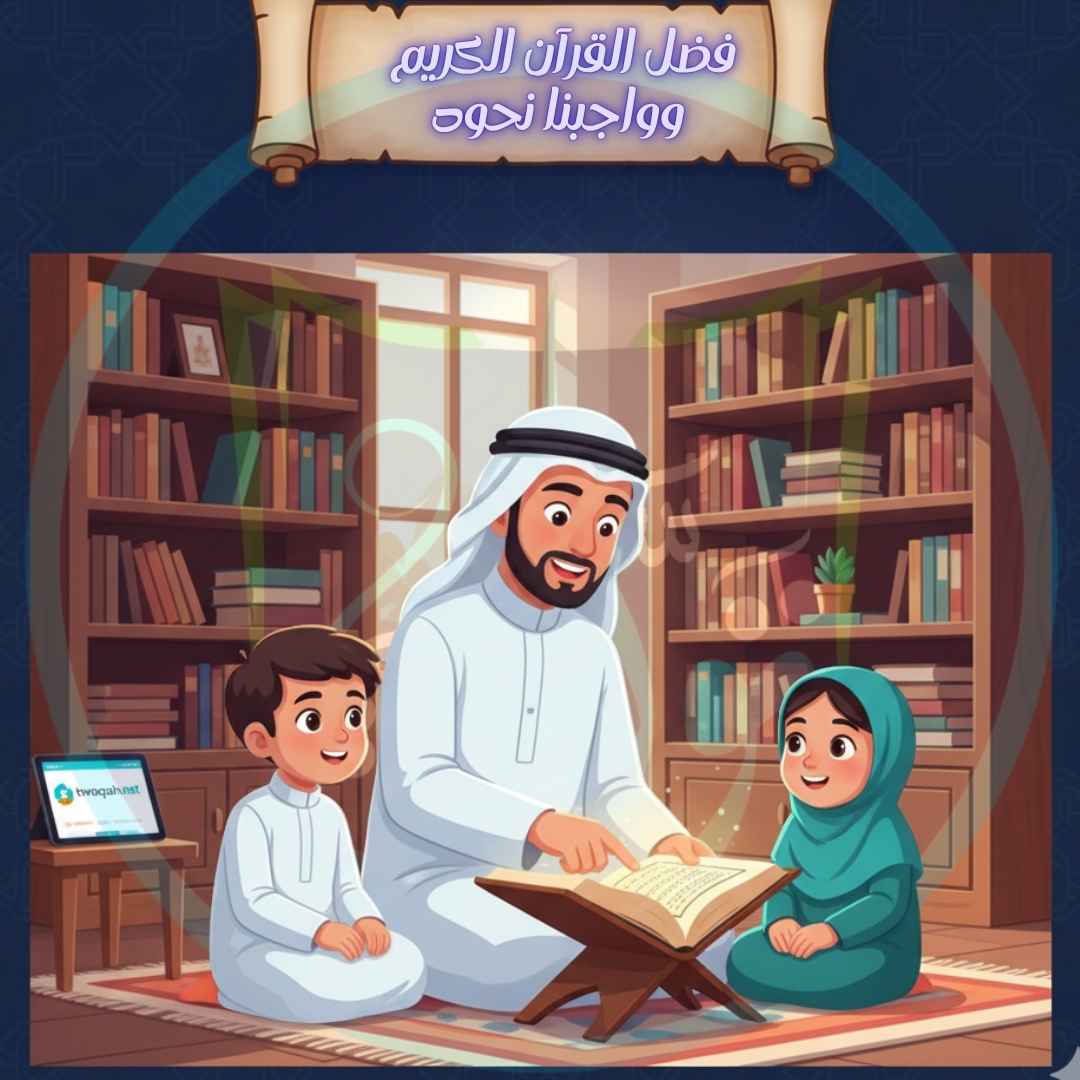
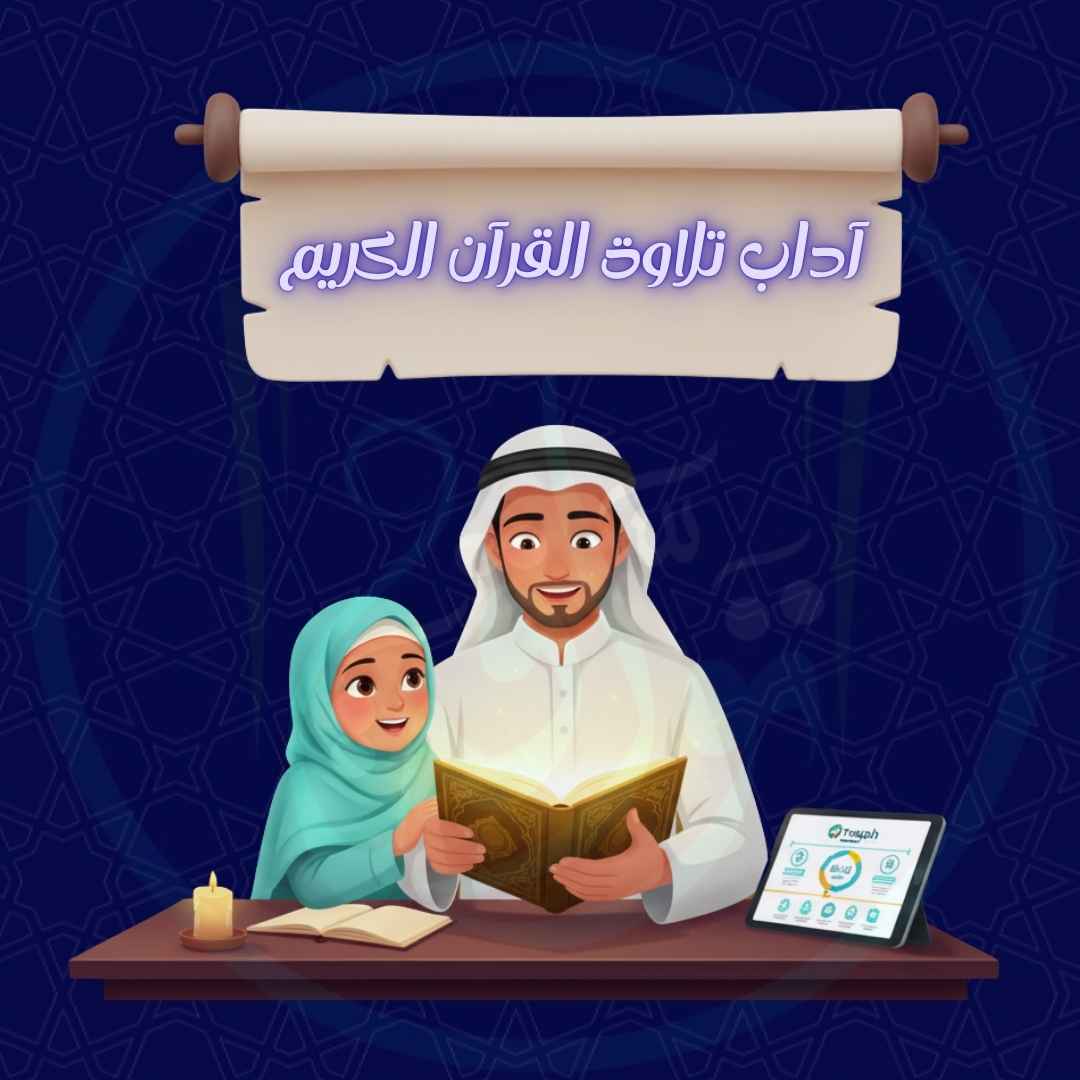
The success of remote Quran memorization for kids depends significantly on the child's home environment and the guardian's partnership. Role Model and Environment: The child must see their parents reading the Quran and treating it with reverence, so that the Quran becomes part of the family's life. As the poet said:
| وَيَنشَأُ ناشِئُ الفِتيانِ مِنّا | Wa yansha'u nāshi'u-l-fityāni minnā | | عَلى ما كانَ عَلَّمَهُ أَبوهُ | ’Alá mā kāna ‘allamahu abūhu |
And the young man among us grows up, based on what his father taught him. | |
Providing Focus: Prepare a quiet and suitable place for the remote session, and ensure "adherence to a single copy of the Holy Quran," so that memorization is linked to the visual image of the Mushaf, which aids remembrance. Daily Follow-up: The guardian sitting with the child after the teacher's session to review what they have memorized, listen to them recite, and consolidate the information. Conclusion: Teaching the Holy Quran to children is the project of the Ummah (Muslim nation) that establishes a generation connected to their Lord, whose tongue is the language of Ad-Dād (Arabic), and whose actions are derived from the guidance of the best of creation. So, make remote learning an opportunity, not an obstacle, and with the tools of the age, invest in the gardens of faith we are commanded to tend. O Allah, make us and our children among the People of the Quran, who are Your people and Your chosen ones. And success is with Allah.
Comments